
Why the Facility Security Officer Role Is Essential for Cleared Facilities
Key Takeaways
- A facility security officer is necessary in ensuring compliance in security.
- Continuous security management helps mitigate risks.
- Awareness by the employees is as crucial as the security process itself.
- Professional FSO consulting helps organizations stay audit-ready and scalable.
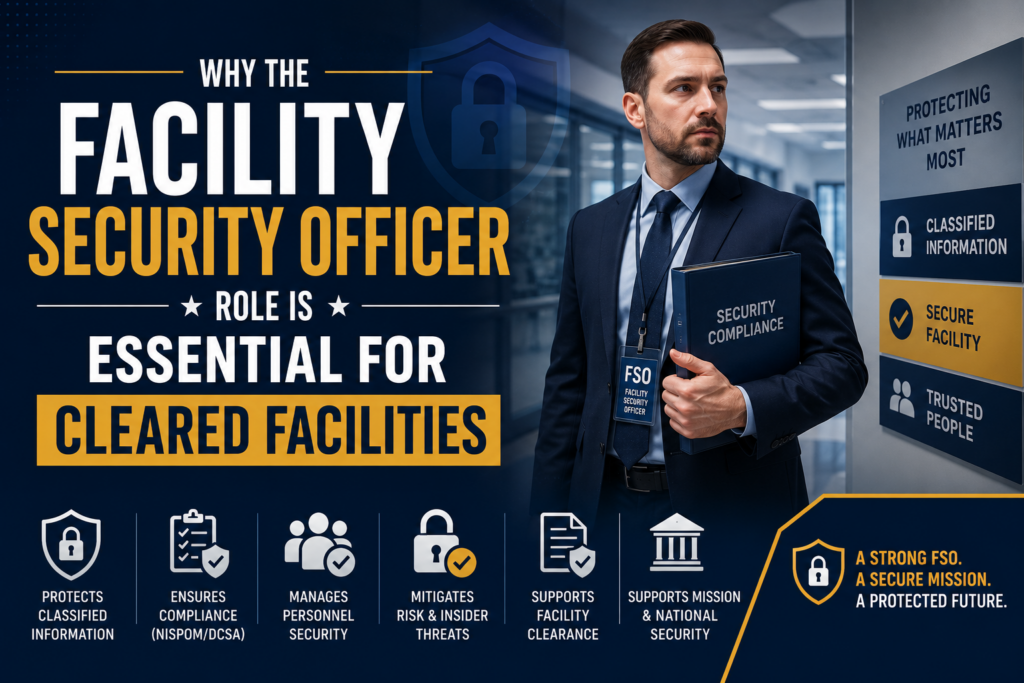
What keeps a cleared facility running securely while meeting strict government requirements? Behind every well-managed security program is a facility security officer who ensures classified information stays protected and compliance never falls behind.
The demand for strong security leadership continues to grow. According to the Government Accountability Office (GAO), the Defense Counterintelligence and Security Agency (DCSA) carried out more than 4,600 security audits in the fiscal year 2025, finding more than 815 security breaches and more than 1,000 open security vulnerabilities at facilities of cleared contractors. This underscores the importance of having security experts within an organization.
In this blog, you’ll learn why the facility security officer is indispensable to cleared facilities and how Dive Deep Security’s FSO consulting services help organizations build stronger security programs.
Why the Facility Security Officer Is the Backbone of Cleared Facilities
The cleared facility is an institution that works within a heavily regulated environment whereby any minor noncompliance will bring unnecessary risks to the organization. In such an environment, the role of the officer is to act as the focal person in matters of security and ensure that the government’s requirements are complied with.
Safeguards Classified Information Every Day
Classification of information extends well beyond storing the information in a secure vault. This includes management of access to the information, implementation of security measures, risk assessments, and the correct handling of the information.
This is done by an officer who creates an environment that promotes security. It is important that the employees be informed on the importance of safeguarding the information. This will contribute greatly to the prevention of mistakes.
Keeps Compliance on Track
Security regulations do not stay static, and neither can your compliance. In keeping up-to-date with your NISPOM and DCSA regulations, you will need to ensure that everything is documented, policy updates are made, and changes are reported.
Instead of reacting right before the inspection, the officer makes sure that all the security procedures are maintained throughout the year.
This helps organizations to:
- Stay aligned with federal security requirements.
- Make sure that your recordkeeping is accurate and audit-ready.
- Prevent compliance problems from becoming compliance gaps.
- Retain your classification contract eligibility.
Manages Personnel and Facility Clearances
Every cleared contract depends on properly managed personnel and facility clearances. Inadequate documentation, lack of proper updates, and incomplete records are all issues that might affect project flow and cause additional paperwork problems.
The officer manages the process of clearance, acts in collaboration with governmental structures, and ensures that the workers have the appropriate access when needed.
With the growth of the organization, these tasks become more complicated. Entrusting such issues to an experienced professional enables the leadership to pay attention to other matters.
Builds a Security-Aware Workforce
The effectiveness of even the most stringent security policies will not work if the people are unaware of what they have to do. That is why training and awareness form one of the main duties of the officer. Whether it is the orientation of new people or giving a refresher to existing personnel, the FSO makes sure that the security policies get integrated into the daily activities of the employees instead of them just being relevant for an audit.
An informed workforce is often considered the best way to prevent security issues from arising within an organization.
Keeps the Organization Ready for DCSA Reviews
The reason DCSA reviews are carried out is to check whether or not the cleared facility complies with all the security measures in terms of protecting classified information. It will be wrong to leave everything to the last minute for a DCSA review.
An officer helps maintain continuous readiness by monitoring documentation, tracking security requirements, and resolving issues before they become findings. Instead of preparing for reviews at the last minute, organizations remain ready throughout the year.
Benefits of continuous review readiness include:
- Fewer compliance issues during inspections.
- Better organization of security records.
- Reduced disruption to daily operations.
- Greater confidence during DCSA assessments.
Supports Long-Term Business Growth
With growth comes responsibility in terms of security. New contracts, more cleared personnel, and different government mandates can rapidly increase the level of difficulty involved in handling your security program.
An experienced facility security officer will help your company grow while ensuring that you maintain control over your compliance. They will make sure that your security is in step with your company’s goals and not a hindrance to it.
How Dive Deep Security Strengthens Your Security Program
Managing an industrial security program requires experience, consistency, and a deep understanding of government regulations. Dive Deep Security delivers all three through expert FSO consulting services designed for organizations operating within the National Industrial Security Program (NISP). Whether you’re pursuing facility clearance or managing an established cleared facility, the team provides practical support tailored to your operational needs.
Beyond serving as your facility security officer, Dive Deep Security can also provide an assistant facility security officer to supplement your internal team, support growing workloads, or assist during periods of transition. From clearance management and policy development to DCSA review preparation and security training, their experienced professionals help simplify compliance while strengthening your overall security posture.
Key Services
- Expert FSO consulting for cleared contractors.
- Facility and Personnel Clearance (FCL/PCL) management.
- DCSA review preparation and ongoing compliance support.
- Security policy and Standard Practice Procedure (SPP) development.
- Insider Threat Program implementation.
- Administration of DISS, NISS, NBIS, and related systems.
- Facility security officer and assistant facility security officer support.
- Security awareness training and self-inspection assistance.
Conclusion
The facility security officer fulfills a crucial function for helping classified facilities protect their classified information and stay compliant. Through the proactive handling of security functions, organizations will be able to lower risks and improve their readiness, allowing them to concentrate on the job at hand.
Dive Deep Security can assist you if you are in search of professional guidance on FSO consulting along with security services, as they have the right kind of experience in order to be able to do so.
Frequently Asked Questions
A facility security officer oversees security compliance, protects classified information, manages clearances, and ensures the organization meets NISPOM and DCSA requirements.
Organizations should consider FSO consulting when pursuing a Facility Clearance, managing classified contracts, preparing for DCSA reviews, or needing expert compliance support.
An assistant facility security officer supports the primary FSO by helping manage documentation, personnel clearances, training, compliance activities, and day-to-day security administration.