Why Expert FSO Consultant Services Are Valuable for Cleared Organizations
Key Takeaways
- Experienced FSO guidance strengthens day-to-day security management.
- Consistent oversight can improve DCSA review readiness.
- Personnel security requires accurate records and ongoing attention.
- External expertise can reduce pressure on internal teams.
- Professional security support can adapt as contractor requirements change.
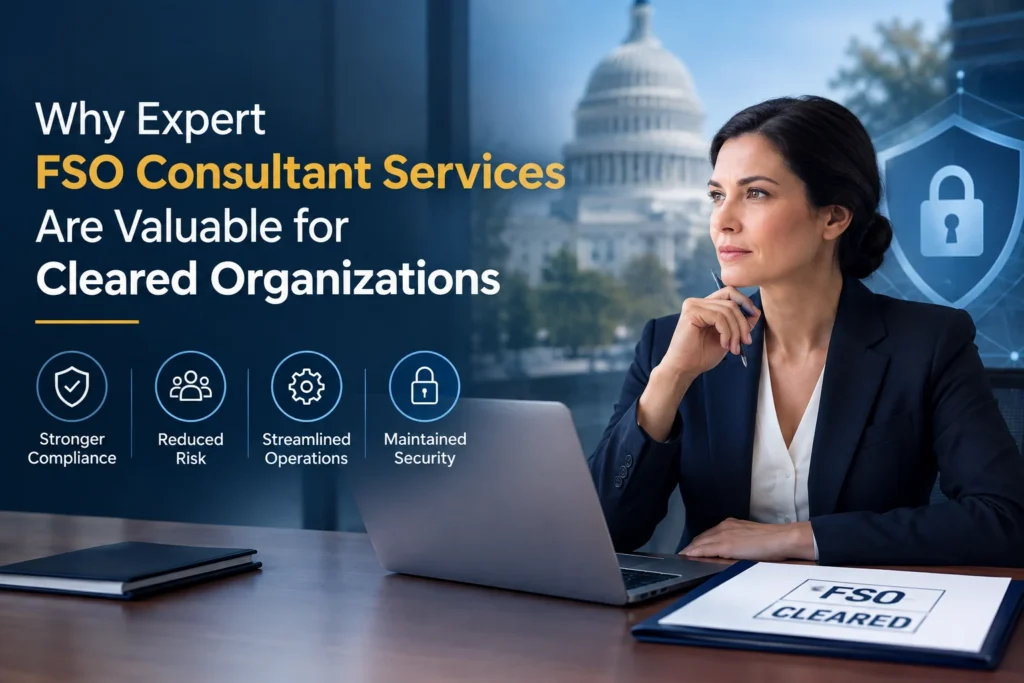
What keeps a cleared organization on track when security requirements become more demanding? Having an experienced professional overseeing the security program can make a significant difference. A qualified FSO consultant can help contractors manage clearance responsibilities, security procedures, employee training, documentation, and DCSA-related requirements with greater consistency.
The job has significant responsibilities. The guidance provided by DCSA mandates that an FSO is responsible for the supervision of the security, protection of classified material, maintenance of security records of personnel, provision of necessary training, and self-inspections, which should be conducted formally at least once a year. Hence, the organization with classified material will benefit from the experienced guidance.
What Makes FSO Expertise Valuable?
Security compliance is rarely limited to one task. A cleared organization may need to coordinate facility and personnel clearances, security training, written procedures, reporting, self-inspections, and communication with government security personnel.
An experienced professional brings these responsibilities together instead of treating them as disconnected activities. This can give leadership better visibility into the security program while helping employees understand their individual responsibilities.
1. Stronger Management of Security Requirements
Federal security requirements can be detailed, particularly for organizations new to the National Industrial Security Program. Experienced guidance can help translate those requirements into practical procedures that employees can actually follow.
This is especially useful when a company is establishing a security program, changing its operations, or preparing for increased classified activity.
A structured approach can help with:
- Security policy development
- Personnel clearance management
- Employee security briefings
- Documentation
- Self-inspections
- Corrective actions
2. Better Preparation for DCSA Oversight
DCSA oversight should not become a last-minute exercise. Contractors need to maintain effective security programs throughout the year.
An experienced security professional can review documentation, identify potential weaknesses, monitor corrective actions, and help management understand where additional attention may be required. This creates a more proactive approach to security rather than preparing only when a review is scheduled.
Dive Deep Security specifically supports contractors with DCSA review preparation and response, along with facility and personnel clearance management.
3. More Consistent Personnel Security
The personnel factor constitutes one of the most essential elements in any classification program for security. The arrival of new employees, shifting job duties, access needs, and termination of employment all entail security activities.
Experienced FSO guidance can help organizations maintain better oversight of personnel security records and clearance activities. It also helps ensure employees understand the security responsibilities associated with their access.
This becomes particularly valuable for growing contractors where the cleared workforce is changing frequently.
4. Less Pressure on Internal Teams
Security administration can take considerable time when added to the responsibilities of employees who already have full workloads.
External expertise can provide additional capacity without requiring an organization to immediately build a larger internal security department. Dive Deep Security offers both full outsourcing and supplemental FSO support, allowing organizations to select an approach based on their operational needs.
The result can be a better division of responsibilities, with internal leadership remaining focused on business operations while security professionals manage specialized requirements.
5. Practical Security Program Development
A security program should reflect how an organization actually operates. Generic policies that employees do not understand or use consistently can create weaknesses.
Professional guidance can help develop standard practice procedures, security briefings, Insider Threat Program plans, and other documentation relevant to the facility’s requirements. Dive Deep Security lists policy development, training guidance, self-inspections, and compliance support among its FSO consulting capabilities.
This practical approach can make security requirements easier to understand and apply.
6. Support During Organizational Changes
Security responsibilities can change when a contractor wins a new classified contract, expands its cleared workforce, changes ownership, adds facilities, or modifies its operations.
Having experienced support available during these transitions can help organizations recognize security implications before changes create administrative problems.
Rather than reacting after an issue appears, security professionals can help management plan for the requirements associated with the change.
How Facility Security Officer Services Help
For organizations that need ongoing assistance, professional facility security officer services can provide a dedicated layer of security expertise. These services may cover clearance management, security documentation, training, DCSA preparation, self-inspections, and day-to-day program administration.
Dive Deep Security provides FSO support for government contractors under DCSA oversight, including interim and long-term staffing, facility and personnel clearance management, security training, policy documentation, and administration of systems such as DISS, NISS, NBIS, eApp, and ACCS.
How Dive Deep Security Supports Cleared Organizations
Dive Deep Security works with organizations that need practical assistance navigating the National Industrial Security Program. Its team supports both companies pursuing Facility Clearance sponsorship and contractors already operating within the NISP.
Its approach can be useful for organizations that need a complete outsourced security function as well as those that simply need additional expertise. Support can include FCL and PCL management, security program development, DCSA review preparation, annual self-inspections, training, and government-system administration.
Conclusion
Clearing a facility is not simply about maintaining policies and paper pushing. Security programs require the knowledge to effectively administer the program and a process that works within the organization.
The assistance of a security professional can be very helpful for organizations who want to maintain a process without the stress on their personnel. For those contractors who require assistance beyond that, Dive Deep Security can provide them with solutions that fit their security needs.
Frequently Asked Questions
An FSO consultant can assist with security program development, facility and personnel clearances, training, documentation, self-inspections, DCSA preparation, and ongoing compliance activities.
External support can be useful when a company is pursuing an FCL, preparing for DCSA oversight, expanding classified operations, experiencing increased security workload, or lacking sufficient internal FSO capacity.
Yes. Supplemental support can work alongside an internal team, providing additional expertise or capacity without requiring the organization to completely replace its existing security structure. Dive Deep Security offers both supplemental and full outsourced support models.