
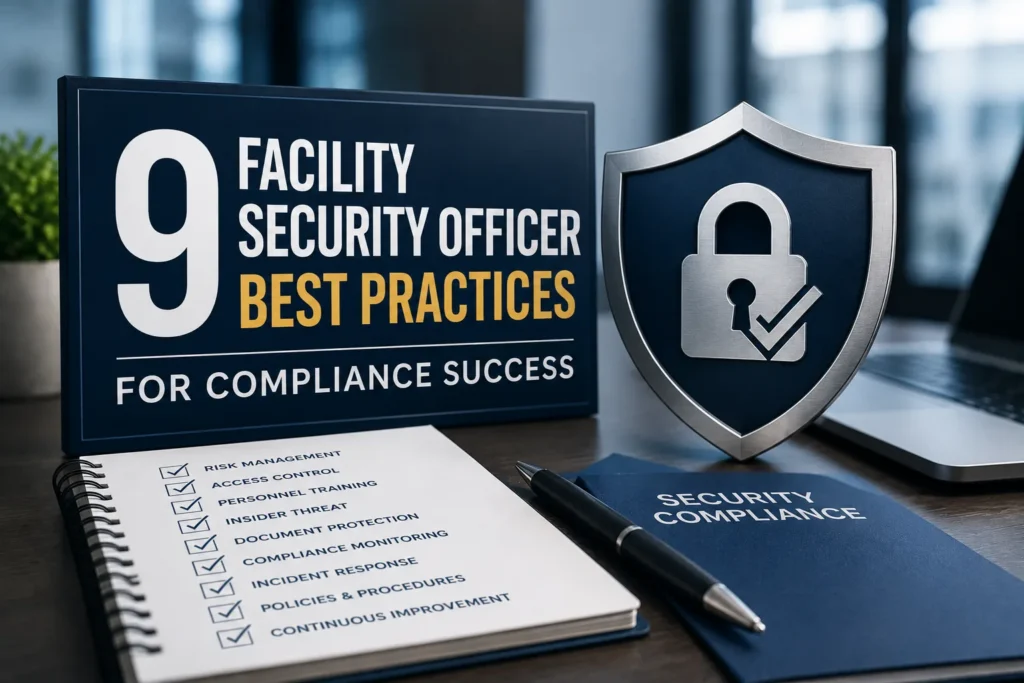
9 Facility Security Officer Best Practices for Compliance Success
Key Takeaways
- Strong FSO practices improve security readiness.
- Regular reviews and training reduce compliance risks.
- Accurate documentation supports successful assessments.
- Professional FSO Consulting strengthens security programs.
What does a prepared facility mean in terms of security? The answer to that question isn’t simply whether a facility has policies but also how that facility ensures that its policies stay relevant through appropriate staffing and processes. A facility security officer is crucial in safeguarding classified material and compliance issues.
With some 12,500 cleared contractor facilities being monitored by DCSA, the need to have an effective security program has become critical for any organization dealing with classified information. In DCSA security evaluations, aspects such as NISPOM effectiveness, security awareness, management involvement, and security practices will be analyzed. These nine tips are meant to aid FSOs in ensuring their security program is successful.
Why Strong Facility Security Officer Practices Matter
A cleared facility cannot depend on documentation alone to maintain security. Proper protection needs constant monitoring, awareness among employees, documentation, and risk management.
The proficient facility security officer links governmental regulations with practical activities, allowing organizations to create a security culture and be ready for DCSA inspections and security reviews,.
1. Keep Security Policies Updated
Your security policy needs to be based on the way your company functions now, not the way it functioned a few years back.
It is important for a facility security officer to keep updating documentation and make sure that employees know what process they have to follow.
Strong policies help organizations:
- Maintain compliance with security requirements.
- Reduce confusion among employees.
- Improve review readiness.
- Create consistent security practices.
2. Perform Regular Self-Inspections
Not all problems will be identified by a formal review process. Self-review allows organizations to detect and solve problems before they evolve into bigger issues.
The preventive measure assists FSOs in reviewing security processes, documentation, training, and reporting in general through the year.
3. Build Employee Security Awareness
Security is the task of everyone. Even if the security system is highly effective, it is going to be ineffective if the people working in it lack knowledge regarding securing sensitive information.
The key to a good facility security officer is developing awareness through education and briefing sessions. It is only when the staff members are aware of the possible dangers that they will act as one of the organization’s defensive mechanisms.
4. Maintain Accurate Clearance Records
Clearance management requires attention to detail. Missing updates or incomplete records can create unnecessary delays and compliance issues.
FSOs should maintain organized personnel records, monitor access requirements, and ensure information remains accurate throughout an employee’s lifecycle.
Effective clearance management helps:
- Prevent unauthorized access.
- Support smoother operations.
- Improve compliance readiness.
- Reduce administrative challenges.
5. Stay Updated With Security Requirements
New security rules keep coming up, and the companies have to change according to them. Keeping updated with any changes to NISPOM requirements and DCSA expectations avoids any old procedures.
A proactive facility security officer reviews updates regularly and implements improvements before issues arise.
6. Strengthen Incident Reporting Procedures
Security incidents require quick action and proper documentation. Employees should know how to report concerns and understand the steps involved in responding to potential issues.
A clear reporting process helps organizations:
- Respond faster to security concerns.
- Document incidents properly.
- Reduce potential risks.
- Improve future prevention efforts.
7. Maintain Effective Security Training
Training should be a continuous activity instead of being conducted annually. Continuous training will help the employees become aware of their roles and responsibilities in adhering to the security policies.
A good training program will contribute positively towards increasing the level of awareness and minimizing errors.
8. Improve Records and Documentation Management
Good recordkeeping is crucial for achieving compliance. From training records to clearance records, good records enable FSOs to be more effective at managing their daily duties.
Using proper systems and maintaining updated documentation also makes it easier to demonstrate compliance during security reviews.
9. Consider Professional Security Support
Managing an industrial security program requires experience and consistent attention. Whereas internal resources are scarce in organizations, FSO Consulting could be a great asset to these companies.
Professional services will help organizations enhance documentation procedures, improve compliance mechanisms, get prepared for reviews, and ensure that security is effective.
How Dive Deep Security Supports Compliance Success
Dive Deep Security helps cleared facilities manage security responsibilities with confidence through expert FSO consulting services. Their team supports organizations with security program management, documentation assistance, compliance guidance, clearance support, training, and DCSA review preparation.
Whether a company needs additional expertise or ongoing security assistance, Dive Deep Security provides flexible solutions designed to simplify compliance and strengthen overall security operations.
Key services include the following:
- FSO Consulting for cleared contractors.
- Security documentation support.
- DCSA review preparation.
- Clearance management assistance.
- Security awareness training.
- Compliance improvement guidance.
- Ongoing security program support.
Conclusion
Security programs are developed through consistency, preparation, and good leadership. With these facility security officer tips, you can increase your chances for compliance, security of classified information, and risk reduction at your cleared facility.
In an age of ever-changing requirements and heightened oversight, it always helps to have experienced help with compliance management. Dive Deep Security helps organizations stay prepared with practical solutions and expert guidance.
Frequently Asked Questions
A facility security officer manages an organization’s security program, protects classified information, maintains compliance records, and ensures security requirements are followed.
FSO Consulting provides expert support with compliance management, documentation, security reviews, and program improvements.
FSOs can improve compliance by maintaining updated policies, conducting self-inspections, training employees, managing records, and addressing security gaps proactively.