
In-House vs Outsourced FSO: Which Is Right for Your Organization?
The Facility Security Officer role continues to evolve rapidly in most organizations because organizations have much higher security expectations than before. Whether it’s protecting sensitive information, managing compliance, or safeguarding an organization’s physical and digital assets, the role of the FSO has evolved from just overseeing administration to being at the forefront of every organization’s security program. With increasing risk due to rapid growth and increased complexity, leadership teams within organizations need to consider whether to build an in-house FSO or outsource this critical function to an external partner. There is no one-size-fits-all answer here; rather, the ultimate decision will depend upon various factors such as available resources, operational complexity, and the company’s long-term strategic goals.
Understanding the Role of an FSO
The Facility Security Officer (FSO) is responsible for safeguarding assets, people, and information in an organization by ensuring that it meets all required security criteria. This includes not only access control procedures but also security policies and audits to ensure compliance with both contractual and regulatory requirements. Since the job functions across multiple departments (IT Operations, Human Resources, and the Executive Staff), an FSO has a direct impact on the security posture of the Company and overall operational efficiency.
Organizations that handle sensitive information, such as production or proprietary technologies, or government contracts, require rigorous oversight regarding the security of their systems. If there is no designated FSO assigned to formalize the administration of security, the responsibilities for providing that administration become varied and different from one individual to another. This creates an opportunity for compliance gaps, resulting in a more significant risk exposure for the organization. The establishment and maintenance of a high-quality FSO function will provide the organization with clarity regarding the organization’s security resources and accountability for the use of those resources. In addition, an organization that has established an FSO function will be able to perform its operations in a more consistent manner.
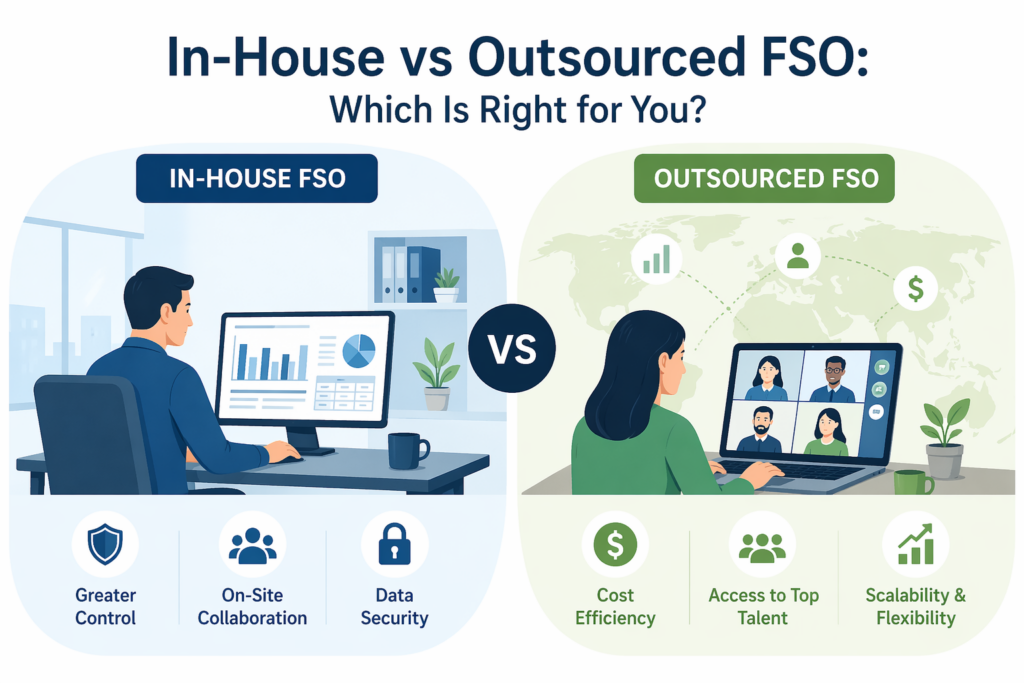
The Case for an In-House FSO
Having an in-house FSO creates a strong knowledge base regarding the company’s processes, cultural norms, and day-to-day activities. The embedded nature of this position provides the ability to create cross-functional relationships between departments and respond quickly to business challenges. Additionally, policies can be customized to the specific environment. Compliance can also be monitored in real-time due to the high level of integration; this is especially valuable for organizations with unique workflows or confidential processes.
Another advantage of having an in-house FSO is having direct control over priorities. Business leaders have the ability to develop their own initiatives, align all security-related activities to the organisation’s business objectives, and modify an employee’s responsibilities as needed. Additionally, the in-house FSO has the benefit of maintaining long-term institutional knowledge concerning past decisions made and how these decisions continue to evolve as new risks emerge. Over time, maintaining this type of individual in the organisation will enhance the consistency of security policies and standards throughout the company by reducing miscommunication.
The challenges associated with maintaining an in-house FSO include recruiting qualified candidates, which can be expensive and time-consuming. The role of FSO requires ongoing education and training to stay current with continually changing standards and emerging threats. Smaller companies may struggle to justify a dedicated employee when requirements fluctuate. Finally, when an in-house FSO is the only person responsible for security functions, they create a significant risk to the business if the person becomes unavailable or leaves the organisation; if there is also no backup resource for the in-house FSO, there will be gaps in expertise available to address issues.
The Benefits of Outsourcing the FSO Function
Outsourcing the FSO function allows access to a wider pool of expertise without the expense associated with having someone on-site. Security partners often have experience across many different industries and compliance frameworks. This experience enables them to assess risk quickly and implement proven best practices. Organizations gain the benefit of best practice documentation and the ability to have consistent oversight without the requirement of building everything from scratch.
Scalability is another benefit. As the needs of the organization change, outsourced services can expand/contract as well. This flexibility can be particularly beneficial to organizations that are adding new contracts, going through an expansion or adjusting to changes in regulation. Rather than hiring additional resources, businesses can use the existing resources of the outsourced team, who are familiar with the evolving expectations of security.
Comparing Cost and Operational Impact
While cost reasons are often a significant factor when selecting between an in-house or outsourced FSO, they are not the only considerations. An in-house FSO usually incurs salary, benefits, training, and operational expenses. These fixed costs will be very difficult for smaller teams to continue to support; whereas with outsourced services, the cost of service is predictable and may allow management to allocate resources more effectively while still offering the level of oversight required.
In addition, the operational impact should be taken into consideration. For example, an in-house FSO can offer both availability and alignment with internal processes, while an outsourced provider is better suited to provide structured experience and a developed perspective across multiple environments. Therefore, the direction a company should take ultimately depends on both the complexity of its security requirements and the level of bandwidth available internally. Established security programs may choose to have an in-house leader; whereas, if a company is developing or enhancing its security framework, the development of that framework will benefit greatly from the use of an outsourced provider.
Choosing What Is Right for Your Organization
Selecting between in-house and outsourced FSO assistance does not have a straightforward conclusion, as it will depend upon your entity’s regulatory requirements, operational complexity, and level of expertise available. Other considerations include the level of source security on a continuous or fluctuating basis and whether internal team members have adequate resources and knowledge to properly manage documentation audits and regulations enforcement. The decisions made using these elements will ultimately determine which model will produce the most sustainable benefits.
Some entities may choose to pursue a hybrid approach to address their needs for FSO assistance by implementing an internal coordinator in conjunction with an outsourced security provider. This structure provides the benefit of day-to-day relationship building with the internal staff member, having oversight from an expert working for an independent organization. Additionally, it assures continuity while providing a high degree of flexibility in implementing the necessary changes to effectively implement a sound security structure conducive to supporting growth and development without exposing the organization to an unreasonable amount of risk.
Conclusion
Whether you select an in-house or external FSO will largely be determined by your size, complexity, and future direction. Each has its benefits, but ultimately, it may be best for your company to determine which solution provides the best opportunity for effective compliance and proactive risk management while also maintaining operational continuity. To assist you in this decision-making process with confidence, Dive Deep Security provides organizations the ability to access experienced FSO resources specific to their individual environment. Our team provides structured processes, subject matter expertise, and continual oversight, allowing for changes in your businesses as they grow and change. Likewise, as a result of partnering with Dive Deep Security, you can achieve reliable assurance of protection, increased readiness to comply with all applicable regulations, and a security framework capable of supporting sustainable growth.
Frequently Asked Questions
A Facility Security Officer (FSO) is responsible for ensuring compliance with security regulations and protecting classified or sensitive information.
An in-house Facility Security Officer is employed directly by the organization, while an outsourced FSO is provided by a third-party security service provider.
Yes, outsourcing an FSO can reduce costs related to hiring, training, and maintaining full-time security staff.