
How Professional FSO Support Improves Compliance and Risk Management
A foundation of the global supply chain is industrial facilities. Manufacturing networks and energy production operate 24/7 now more than ever during times of high global economic uncertainty. As industrial facilities are running 24 hours a day, 365 days a year, they must manage a variety of assets, including but not limited to life safety and emergency applications, sensitive data and information, and complex machinery/equipment.
To meet these responsibilities, industrial facilities can also face considerable risk. Industrial Security Management and Compliance should be a part of every organization that operates in the industrial sector. A security framework helps protect the personnel, data, physical infrastructure, and reputation of an organization.
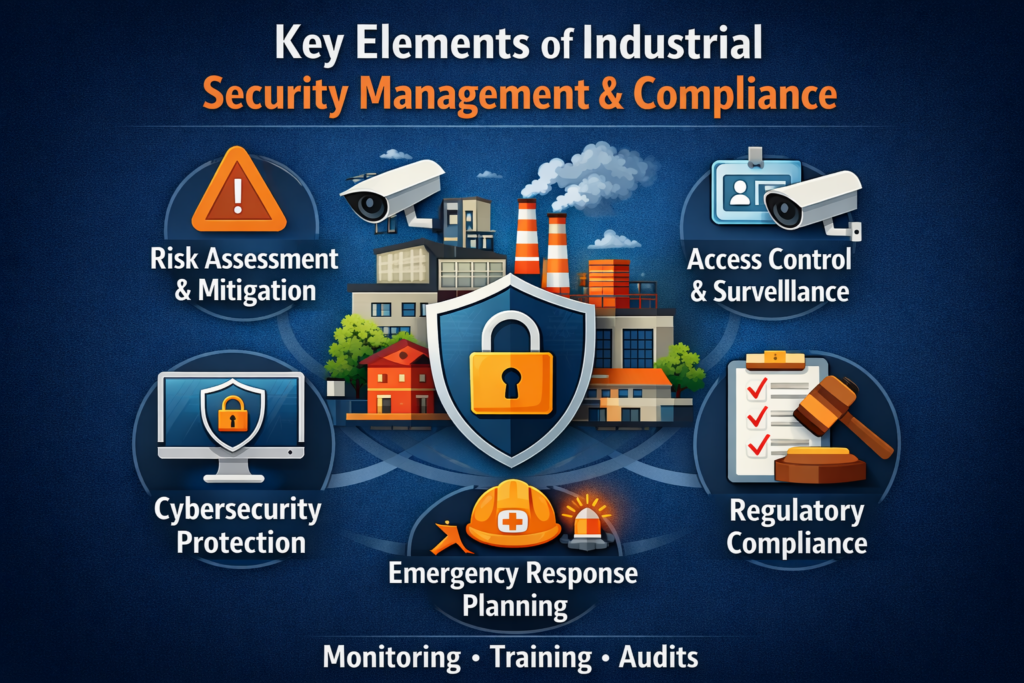
Here are the key Elements Of Industrial Security Management
Understanding Risk Through Comprehensive Assessment
A detailed risk assessment begins every successful security programme. As industrial sites differ in their size, layout, and purpose, it is important to identify any particular vulnerabilities. Part of the process used to conduct an assessment is considering the access points, reviewing prior incidents, assessing the surrounding area, and identifying vital assets. A comprehensive hazard assessment allows organisations to prioritise their resources and to concentrate their efforts in areas of the highest potential consequence. Without an awareness of what threat exists, organisations may invest money in security measures that do not properly address their most significant threats.
Strengthening Physical Security Measures
Physical security is the first clearly identifiable layer of protection for industrial spaces. The combination of perimeter fencing, surveillance systems (cameras), lighting, access control locations, and alarm systems serves as various programs/efforts to deter unauthorized entry. However,it will be more successful with multiple levels of protection, since if one element of protection fails, then there are still other forms of protection in place to stop and prevent intrusions.
Security personnel also play an important role by monitoring events or activities that they observe, along with working to respond to any incident that may occur, and assisting in establishing a culture of vigilance towards maintaining a safe work environment. Having a secure physical environment will ultimately reduce crime in an area and will produce a positive level of confidence in all involved, including employees and partners.
Integrating Cybersecurity into Industrial Operations
With the shift towards greater digitization in the modern world comes an increase in the importance of cybersecurity in security management. Today, the majority of industrial operations rely on some level of digitization, and as such, they also rely on industrial control systems, automated production lines, and the use of connected devices. These items bring many benefits by way of efficiency; however, they also introduce a significant risk to the organization by introducing potential vulnerabilities.
When subjected to cyber threats, production can be interrupted and/or sensitive data can be compromised, resulting in losses (financial and otherwise). Measures to reduce these risks can include the implementation of firewalls, network monitoring technologies, data encryption, and access restriction technologies. In order to mitigate the likelihood that a human error will cause a cyber incident, employees must also be trained on appropriate cybersecurity procedures.
Ensuring Regulatory Compliance and Legal Adherence
Maintaining compliance with local, state, and federal laws for safety in the workplace; compliance with environmental regulations, including the proper disposal of hazardous materials and data protection laws; each of these areas represents a significant area of responsibility in the management of industrial security. When an organization does not comply with any of these requirements, the consequences can be financially crippling (depending on the severity of the violation), closure of the facility, or considerable damage to the company’s brand image.
Policies and procedures that clearly define how to comply with regulatory requirements help organizations consistently comply with those regulations as well as establish a basis for proving to authorities and stakeholders that corrective actions have been taken following an audit or inspection.
Preparing for Emergencies and Crisis Management
In the case of an emergency occurring, you need to have an emergency crisis management plan to address such an emergency. How to handle fire emergencies, hazardous material spills, natural disaster emergencies, or any security breaches is part of the preparation plans when an emergency occurs. Earnestly conducting regular “crisis drills” can assist with testing and verifying how well you will react during an actual emergency, as well as help identify weaknesses in your response plan.
There needs to be communication systems set up to provide quick access to up-to-date information when the stress levels are highest during an emergent circumstance. Preparing adequately will reduce damages to your facility, improve the safety of staff & the speed of your facility returning to normal business operations after an unexpected incident.
Managing Third-Party and Vendor Risks
Third-party vendor risk management is important to the success of any organisation. Many times, third parties or vendors will require access to your facility, and an additional layer of risk is added to your organisation. Ways to reduce the risks associated with third-party or vendor access include: Proper screening of vendors; Controlled access; Clearly defined security requirements; Clearly defined compliance expectations in contracts; and ensuring all compliance expectations meet your organisation’s standards. By monitoring third-party activities as well as their systems, you will increase the overall security of your organisation by preventing any possible security gaps that are created.
Conclusion
At Dive Deep Security, we realize that security in an industrial setting isn’t a one-size-fits-all solution. Each specific facility has very unique requirements (challenges), regulatory requirements, and operational needs.
Our Facility Security Approach combines comprehensive risk assessment with individually tailored security strategies and ongoing assistance with compliance to support organisations in protecting their assets and personnel. With Facility Security Officer (FSO) specialists who are both skilled and accountable, industrial sites can benefit from the peace of mind that comes from knowing that they are being adequately protected today and are well prepared for tomorrow.
Frequently Asked Questions
To protect facilities, personnel, information, and equipment from threats and risks.
Management, security teams, and employees all share responsibility for compliance.
Self-Inspections and Audits should be conducted regularly, typically annually or as required by regulations.