
The Role of a Facility Security Officer in Industrial Security
In today’s fast-changing world of industry, security measures have extended well beyond locked doors and cameras. As a strategic business function, security also serves as a means to protect the people, property, and proprietary information; it also serves to provide business continuity. Within this scope resides the Facility Security Officer.
The Facility Security Officer serves as a connector between the organization’s leadership team, the employee population, and government regulatory agencies. The Facility Security Officer helps to ensure that industrial facilities can operate safely and in compliance with the requirements of the various authorities without negatively impacting productivity. As the global threats facing the industrial environment continue to become much more complex, the need for Facility Security Officers will continue to increase.
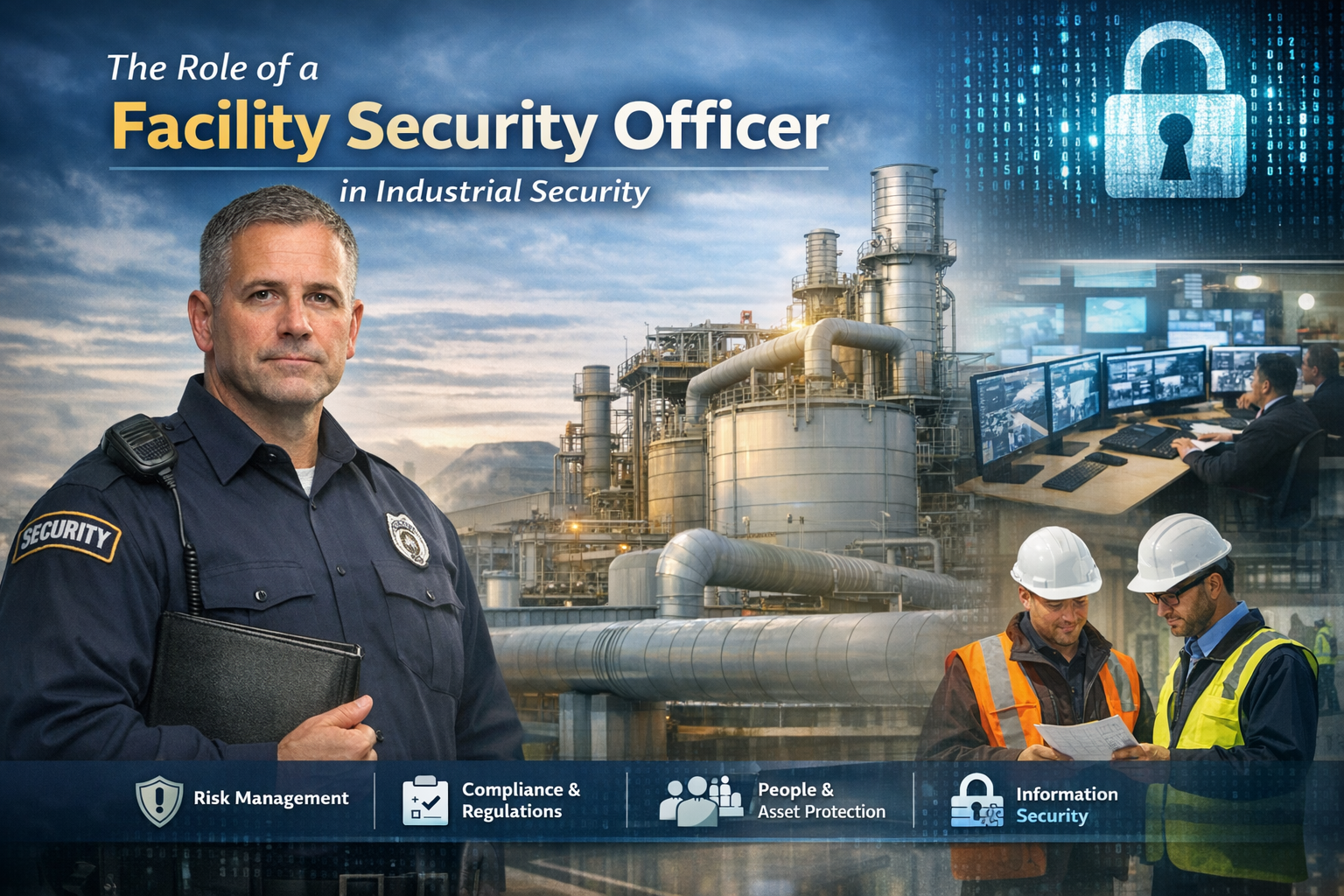
Understanding the Core Responsibilities of a Facility Security Officer
Facility Security Officers create and manage industrial security systems meant to protect the property and regulate how people gain access to said property. Accordingly, the FSO must comply with both federal laws and regulations as well as industry-specific requirements.
A Facility Security Officer (FSO) conducts risk assessments in order to evaluate known vulnerabilities and implement countermeasures against identified risks. In addition to these countermeasures, other responsibilities of an FSO include but are not limited to supervising security officers, managing security technology, interfacing with emergency services and law enforcement, and remaining vigilant and adaptable to the continually changing threats posed to an industrial facility.
Protecting People and Physical Assets
As a Facility Security Officer, one of the most recognisable roles is to protect workers, guests, and contractors from harm. Many production facilities use heavy machinery and or storage of potentially hazardous materials and or have areas that are not open to everybody. By having a well-defined security procedure in place and an effective access/exit control (door lock access badge) in place, the chance of somebody entering these prohibited areas (unauthorised access) and causing an accident or purposely causing damage is minimised.
Also, Facility Security Officers will develop and implement evacuation procedures, emergency response procedures, and conduct safety drills to train employees on how to respond to an emergency. Through training and conducting drills, the Facility Security Officer provides both employees and the Facility Security Officer with the tools and training needed to prevent injury to self or others from not knowing how to react in an emergency and reduce confusion.
Managing Information and Confidential Assets
Facility Security Officers have the responsibility of protecting confidential information in addition to physical protection. Industrial facilities have many types of proprietary information, such as technical designs, manufacturers’ intellectual property (IP), business and operational strategies, that all require confidentiality.
Facility Security Officers also prevent data (both electronic and physical) breaches and/or theft of IP by implementing and supporting the execution of information security-related policies; monitoring the access of sensitive information; and working with IT teams to ensure that both physical and digital assets are protected from unauthorized access.
The Human Element of Industrial Security
A good Facility Security Officer will realize that the security function is more than just hardware, procedures, and policies; it is also about the people that work within an organization. Building a foundation of trust, fostering awareness of personal and company assets, and creating a culture of security within the workplace are all essential elements of the Facility Security Officer’s role.
The Facility Security Officer develops an employee’s understanding of his or her participation in the provision of security through conducting training sessions, open lines of communication, and leading by example. When employees feel informed, educated, and involved in the overall process of securing their workplace, they will be more likely to participate in implementing the security programs and procedures of their employer.
Conclusion
Proactive Risk Management (PRM) is the foundation for successful strategy and policy development. A skilled Facility Security Officer who is skilled will proactively identify and manage potential threats to reduce the chances of them becoming incidents. Our FSOs at Dive Deep Security are experienced professionals who can deliver FSO services tailored to meet the requirements of a variety of industries in order to provide consistent protection and confidence in their operations.
Frequently Asked Questions
A Facility Security Officer manages security risks, ensures regulatory compliance, protects assets, and maintains a safe working environment in industrial facilities.
They help prevent security breaches, ensure legal compliance, protect sensitive information, and support business continuity in high-risk industrial environments.
Manufacturing, energy, defense, construction, logistics, pharmaceuticals, and other industrial sectors benefit from professional FSO services.
Dive Deep Security provides experienced FSOs who deliver proactive risk management, compliance support, and tailored security solutions for diverse industries.