
What Does an FSO Do? Understanding FSO Services and Responsibilities
Key Takeaways
- FSOs manage important aspects of security for a cleared facility.
- These responsibilities include protection of classified information, training, and personnel security.
- Self-inspection on an annual basis helps to highlight weak points of security.
- Specialists can be employed to address these problems as consultants when necessary.
- FSO job positions range from facility security to industrial security.
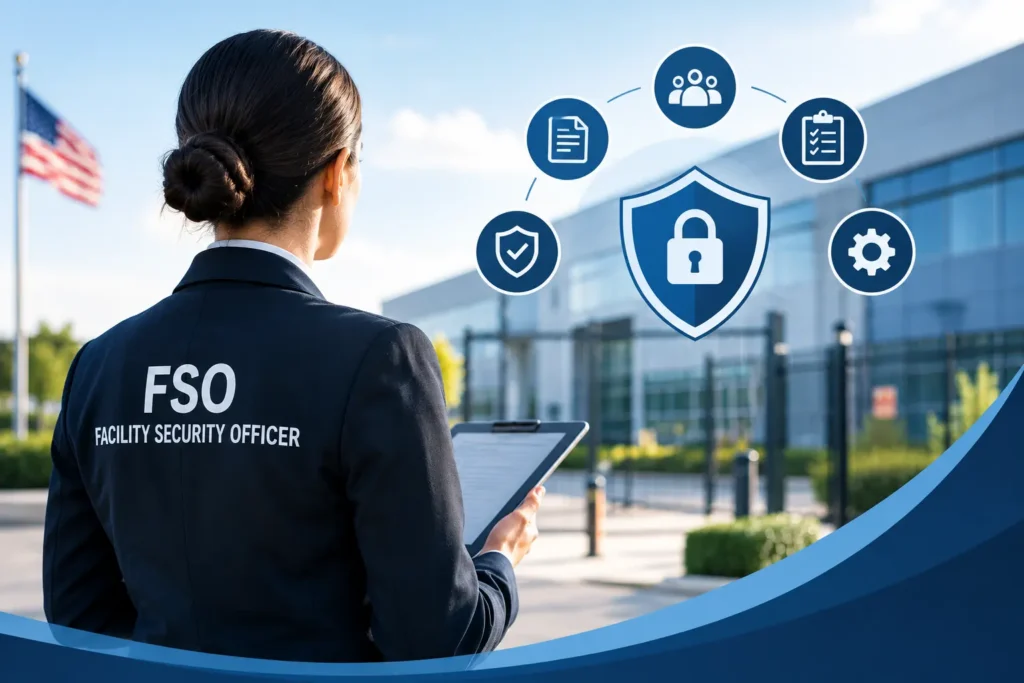
What really goes on when a business is tasked with handling classified information? The Facility Security Officer, also known as the FSO, plays a big role in ensuring that the organization complies with all the security policies that go hand-in-hand with such information.
The DCSA guidelines require the FSO to oversee security practices, ensure that there are personnel security records, provide briefing sessions, and conduct at least one self-inspection of the facility per year. Since DCSA has jurisdiction over more than 12,500 cleared contractor facilities, facility security management is still very significant to the National Industrial Security Program.
What Is a Facility Security Officer?
An FSO is an individual that will be responsible for the supervision of the industrial security program within a cleared organization. All cleared organizations should have an FSO that will act as one of the main contacts concerning their industrial security program and the adherence to NISP requirements.
However, the FSO’s duties extend far beyond just organizing security documents. They cooperate with management, cleared personnel, government people, and others in ensuring that security requirements are adhered to.
What Are the Main Responsibilities of an FSO?
The exact workload may vary based on the facility, contractual agreements, level of classification, and security needs. There are some duties that serve as the basis for this job position.
Protecting Classified Information
It is among the responsibilities of the FSO to ensure that classified material is appropriately protected. This includes the setting up of controls that would enable access to the classified material by the appropriate people.
Additionally, the FSO helps develop written procedures when needed and makes sure that the workers understand what is required of them.
Managing Personnel Security
Personnel security is another significant part of the job. FSOs help manage clearance-related activities and maintain appropriate personnel security records.
When employees require a security clearance, the FSO may review documentation for completeness and support the submission process. DCSA also assigns FSOs responsibilities involving items such as SF-312 nondisclosure agreements and applicable personnel reporting.
Providing Security Training
Security procedures are only effective if the employees know them. The FSO ensures that all the cleared employees get the necessary briefings, such as initial briefing, refresher briefing, debriefing, and special briefings where applicable.
Training helps employees gain an understanding of what they need to do in case of any security problem.
Conducting Self-Inspections
An FSO also has an important role in evaluating the facility’s own security program. Formal self-inspections have to be performed at least once each calendar year as per DCSA guidance.
Inspections help companies recognize their shortcomings and solve any problems they might be having.
How Do FSO Services Support Contractors?
Taking on all of these tasks internally is often very difficult, especially for small contractors or organizations that are just getting started with classified operations. Facility security officer services can offer extra help to facilities needing assistance with setting up, running, or upgrading their security programs.
Depending on the organization’s needs, support may include:
- Facility and personnel clearance management
- Security policy and procedure development
- Employee security briefings
- DCSA review preparation
- Annual self-inspections
- Insider Threat Program support
- Government system administration
- Ongoing compliance assistance
Dive Deep Security provides both supplemental and fully outsourced FSO support for government contractors operating under DCSA oversight.
When Should a Contractor Consider an FSO Consultant?
Each company does not have the same security staff requirements. The contractor may have an FSO on staff who needs additional knowledge when there is a large project, a DCSA review, a facility clearance process, or a growth spurt in the company.
The FSO consultant can offer additional advice without necessitating the need for the company to hire additional staff. This is especially true for those companies that are establishing their security programs for the first time.
Dive Deep Security helps companies through FCL sponsorship, policy formulation, personnel clearances, DCSA readiness, self-inspection, and security program management.
Why Does the FSO Role Matter to Business Operations?
Security is an integral part of the cleared contractor’s business. Badly managed clearance files, old processes, missed training, and open security problems can cause operational problems.
Having an effective FSO means linking up the security needs with the business activities of the company. This makes sure that the staff know their responsibilities and that the management is aware of their security responsibilities and can sort out any problems before they become a bigger problem.
The DCSA’s security review looks at the contractor processes and security processes to check for compliance with NISPOM.
What Does an FSO Career Look Like?
For those interested in FSO jobs as professionals, this position will provide an opportunity to gain experience in areas like personnel security, industrial security, compliance, risk management, and government contracting.
In terms of skills needed, this job will need attention to detail, good judgment, communication, and the ability to handle multiple security tasks at the same time. Career paths for individuals in this field may vary from FSO careers to assistant FSO jobs, security specialist jobs, and even industrial security jobs.
Assistant Facility Security Officer is one of the careers offered by Dive Deep Security.
How Dive Deep Security Supports FSO Requirements
Dive Deep Security assists government contractors in handling the real-world obligations related to facility security. As a leading FSO company, we offer services in FSO from interim and permanent staffing to program development, clearance management, DCSA, and compliance.
For entities that don’t require a permanent FSO within the company, outsourcing can be a good way to get experienced personnel without the hassle for current staff.
Conclusion
FSO is a critical component of the process of ensuring readiness, compliance, and protection of classified material within cleared companies. The FSO is made up of security, personnel, training, documentation, and evaluation aspects.
From daily support to specialized guidance and even more staff, FSO support can facilitate the task of handling security obligations in an organization. Dive Deep Security offers FSO solutions that aim at assisting cleared organizations in maintaining their security programs based on changing requirements.
Frequently Asked Questions
An FSO may control personnel clearance processes, maintain security files, conduct staff briefings, assess processes, resolve any security issues, and liaise with government security officers.
Yes. DCSA states that every cleared company must appoint an FSO responsible for operational oversight of compliance with NISP requirements.
Yes. Organizations can use supplemental or outsourced FSO support depending on their security requirements. Dive Deep Security provides both models for government contractors.